Home/Blog/Run Your Operations
Run Your Operations|Your COO Hat
AI & Automation

Is Your New AI Coworker Actually a Trojan Horse?

RC
Ryan Cunningham
||5 min read
Is Your New AI Coworker Actually a Trojan Horse?

If you have been paying attention to the AI space this week, you have probably seen the hype around Anthropic's new "Claude Tag" feature. It sounds like the ultimate productivity hack. You drop Claude directly into your Slack channels, and suddenly you have a tireless AI teammate. It reads your threads, learns your context, breaks down tasks, and even proactively jumps in to remind you about stalled projects.

Anthropic claims that 65% of their own product team's code is now written by their internal version of this tool. That is a massive number. It is easy to see why small business owners might want to jump on board. Who wouldn't want an employee that works 24/7, never complains, and already knows how your team communicates?

But let's take a step back and look at what is actually happening here. We need to talk about the concept of "behavioral lock-in," and why it is a bigger deal than most people realize.

What Claude Tag actually does

Claude Tag launched on June 23, 2026 as a beta for Slack. It is not a chatbot you DM for quick answers. It is a persistent, shared AI identity that lives inside your Slack channels, watches your conversations, and builds a growing map of how your company operates.

It has an "ambient mode" that lets it proactively jump into conversations, surface information from across your channels, and follow up on tasks that have gone quiet. It works asynchronously, meaning it can pursue projects over hours or days without you having to babysit it. And critically, it is not just your AI. It is the whole team's AI. Everyone in a channel interacts with the same Claude instance, and it remembers everything.

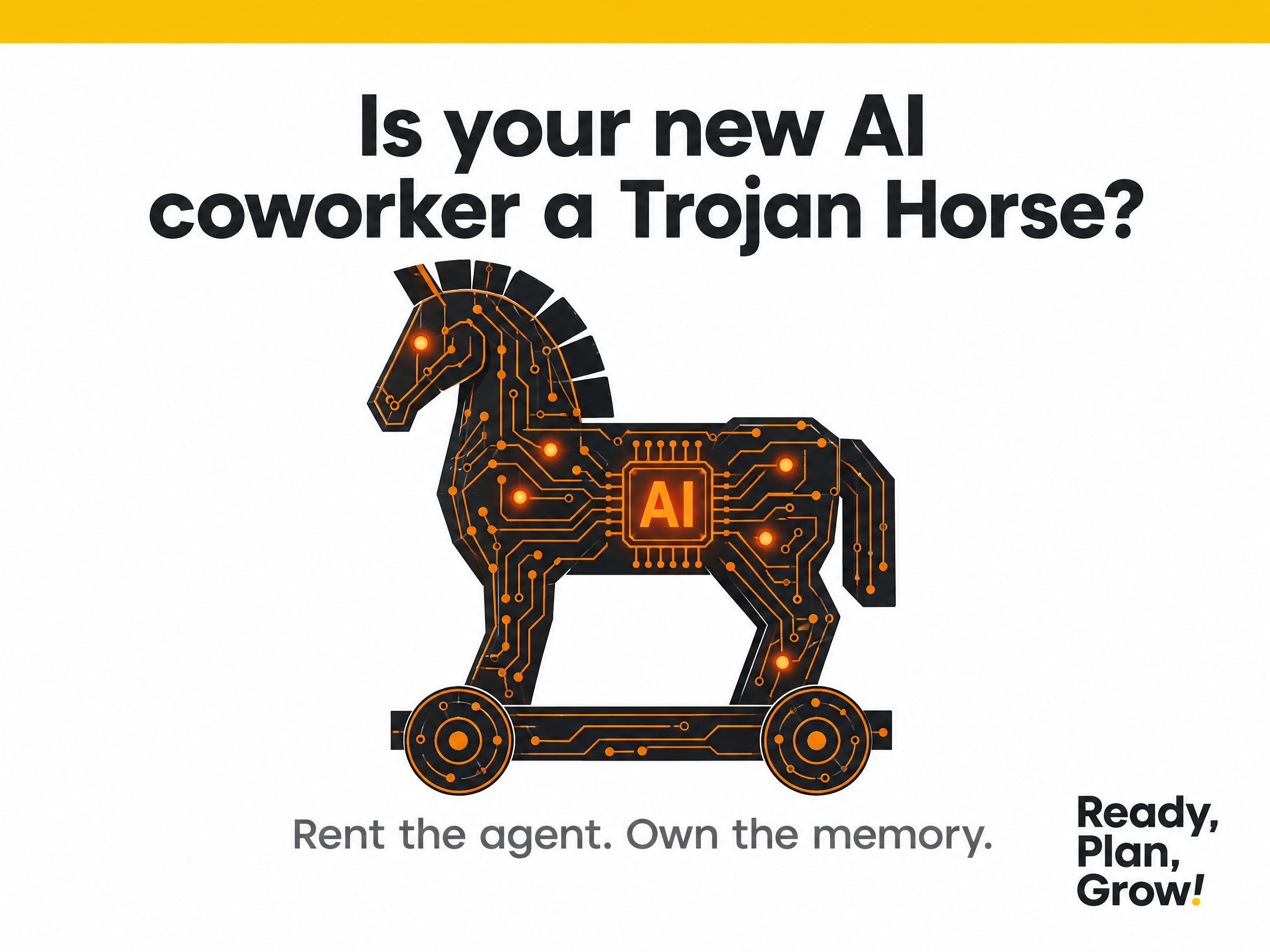
Princeton professor Arvind Narayanan called it "a dangerous bargain for enterprises because of the pricing model and the risk of lock-in." That is a polite way of saying what I am going to say more directly: this is a Trojan horse for your company's operating system.

The danger of behavioral lock-in

Here is what most people miss when they think about AI tools and vendor risk.

When you use a standard SaaS tool, you own your data. If you decide to move from one CRM to another, you can export your customer list as a CSV file. That is data portability, and it is a solved problem.

Claude Tag does something entirely different. It does not just store your data. It learns your behavior.

As Claude sits in your Slack channels day after day, it absorbs the unwritten rules of your business. It learns that when your ops lead asks for "the usual report," she means a specific three-tab format. It learns who approves what, how you handle difficult client situations, and the internal shorthand your team uses that is never written down anywhere. It builds a complex, operational map of your company's brain.

The problem is that you cannot export that map.

Keep reading

If Anthropic raises their prices next year, or if you decide you want to switch to a different AI model, you cannot download a CSV file of your company's operational context. That knowledge lives inside Anthropic's proprietary memory system. If you leave, you are effectively firing the one "employee" that knows the most about how your business actually runs. That is behavioral lock-in, and it is a fundamentally different kind of risk than anything we have dealt with in SaaS before.

The MindStudio team described it well: "Behavioral lock-in is the accumulated switching cost created when an AI agent learns how your organization communicates, decides, and operates, and that learning isn't exportable in any meaningful way."

This is not just a big-company problem

You might be thinking this is an enterprise concern, not something a small business needs to worry about. I would push back on that hard.

Small businesses are actually more vulnerable to this kind of lock-in, not less. A large enterprise has IT teams, legal departments, and procurement processes that force these questions to the surface. A small business owner just signs up for a tool because it looks useful, and three years later they are completely dependent on it.

The companies racing to plant their flags in your Slack channels know exactly what they are doing. Microsoft has Copilot. OpenAI launched Workspace Agents in April. Salesforce is pushing Slackbot hard. Every one of these companies understands that the AI system that lives where your work happens gains an enormous data advantage. The more it learns about your business, the harder it is to replace.

This is not just an AI problem, either. We have written about how the same dynamic plays out with your marketing tools. If you have ever been locked out of your own website or ad account because a contractor held the login, you already know what it feels like to lose control of your own business infrastructure. The post How to Take Back Control of Your Marketing Tools walks through exactly how to fix that — and the same principles apply here.

The rule: rent the agent, own the memory

This is not an argument against using AI. AI is the greatest lever small businesses have right now, and I use it every single day to run Ready, Plan, Grow!.

The rule is simple: rent the agent, own the memory.

Use powerful AI models to execute tasks. Let them write your copy, analyze your data, and automate your workflows. But the durable knowledge — your standard operating procedures, your brand voice guidelines, your client preferences, your decision frameworks — needs to live in a system you control.

That means your own wikis. Your Google Drive. Your GitHub repositories. Your own documented runbooks. Not inside a proprietary chat interface owned by a company whose pricing model and terms of service can change at any time.

When you let an AI model become the sole repository of your team's operational knowledge, you are handing over the keys to your business. The tool that is supposed to serve you starts to own you.

What to do right now

If you are already using AI tools inside your team's communication channels, here are three things worth doing today.

First, audit where your institutional knowledge actually lives. If the answer is "mostly in our AI tool's memory," that is a problem. Start documenting your processes in a system you own.

Second, before enabling any ambient AI feature that monitors your channels, ask: can I export what this tool learns about my company? If the answer is no or unclear, proceed carefully.

Third, build your AI stack on top of a knowledge base you control. When we build AI systems for our clients at Ready, Plan, Grow!, the knowledge base always belongs to the client. The AI is a tool that reads from that base. The client owns the brain.

Not sure where your business stands right now? Our AI Brand Audit is a good place to start. It looks at how your business is currently using AI and digital tools, identifies where you have exposure, and gives you a clear picture of what you own versus what a vendor owns on your behalf.

AI should be a tool that empowers your team, not a system that quietly extracts your company's operating manual and stores it somewhere you can't access.


Want to build AI systems where you own the knowledge base? That is exactly what we do at Ready, Plan, Grow!. We are Generation X founders who lived through the corporate culling of 2023 and 2024, and we know what happens when you rely too heavily on systems you don't control. We build real results without vendor lock-in.

See how we work with small businesses


Frequently asked questions

What is Claude Tag? Claude Tag is a feature from Anthropic that embeds its Claude AI model directly into Slack as a persistent, shared team member. It was launched in beta on June 23, 2026 for Claude Enterprise and Team customers. It can read channel history, complete tasks, and proactively surface information.

What is behavioral lock-in? Behavioral lock-in happens when an AI agent learns how your organization communicates and operates, and that learned context cannot be exported or transferred to another system. Unlike data lock-in, where you can export files, behavioral lock-in traps your company's institutional knowledge inside a vendor's proprietary system.

Is Claude Tag dangerous for small businesses? The risk is real but manageable if you go in with a clear strategy. The danger is not the tool itself. The danger is becoming dependent on it without keeping your institutional knowledge in systems you control. Small businesses should follow the principle of "rent the agent, own the memory."

How do I protect my business from AI vendor lock-in? Document your processes in systems you own, like Google Drive, Notion, or GitHub. Build your AI workflows on top of a knowledge base you control. Before enabling any AI feature that builds persistent memory, ask whether you can export that memory in a usable format.


Sources: Anthropic Claude Tag launch post (June 23, 2026); Arvind Narayanan via X (June 24, 2026); MindStudio, "What Is Behavioral Lock-In?" (April 9, 2026); TechCrunch, "Anthropic's Claude Tag is learning your company, one Slack message at a time" (June 23, 2026); AlphaSignal, "The Real Claude Tag Question Is Context Ownership" (June 24, 2026)

Share this post
RC
Ryan Cunningham
Co-founder, Ready, Plan, Grow!

Ryan is the technical co-founder of Ready, Plan, Grow! He builds the systems, frameworks, and tools that help small business owners run smarter operations.

More to read