

Your Small Biz COO Framework

Business Operations

Every business has a CFO. In yours, that’s you. Know what’s making money, what isn’t, and exactly what to do next.

Why this pillar matters

The three things every CFO delivers

Clarity. Consistency. Visibility.

Clarity

Knowing who owns what, where your processes live, and how work actually moves through the business. A real COO doesn’t let systems live in people’s heads.

Consistency

Creating repeatable processes, shared standards, and role-based access so work gets done reliably. Not when you remember. Not when you’re available. Every time.

Visibility

When your business is organized internally, it shows up better externally. Search engines and AI tools recommend businesses they can read clearly. Clean systems make that possible.

Small businesses grow when they create clarity, build consistency, and earn visibility. Operations is where consistency lives. Without it, your numbers are unreliable and your marketing can’t run.

Is this you?

The business runs..
But only because you're holding it together.

The framework

Own. Control. Document. Measure.

Four pillars. In order. Most founders skip all four and wonder why
the business can’t run without them.

Own the assets

Your website, your domain, your email lists, your social profiles, your customer contact system. All of it should be registered to the business, not a vendor, a contractor, or a personal email from 2012.

Control the access

Role-based access for every tool. Credentials in one secure place. The ability to add or remove people without losing control of the account. If a relationship ends, the business keeps its assets.

Document the process

Recurring work should not live in your head. The five tasks you repeat every week, the onboarding sequence, the way you handle invoices. When it’s written down, it can be delegated, automated, or handed off.

Measure what matters

Not every metric. The ones that tell you whether the business is actually running the way it should. A simple review rhythm, on a consistent schedule, is what turns operations into a management practice instead of a scramble.

Hard Truth – Marcela Shine

“Most founders think they have a marketing problem or a sales problem. What they actually have is an operations problem. Everything downstream of operations depends on it. The numbers, the content, the team. If the systems are broken, everything else is guesswork.”

MS

Marcela Shine

Co-founder, Ready, Plan, Grow!

What it looks like in practice

Real scenarios. Real consequences.

A founder can’t update the homepage without calling the web developer who built it two years ago.

The business doesn’t own its own website. Or if it does, no one knows the credentials. Either way, the founder is paying someone else to hold the keys.

A team member leaves and takes months of customer data, email templates, and login access with them.

Operational ownership was never set up. Business tools were under a personal account. When the person left, the access left too.

A founder has a team but still gets pulled into every task because no one knows how to do anything without asking first.

The processes exist in the founder’s head. Nothing is documented. Delegation is impossible because there is nothing to hand over.

The business feels busy but the founder can’t tell whether it’s actually profitable or on track.

No review rhythm. No consistent metrics. Activity is visible. Results are not. That’s an operations gap, not a numbers gap.

Your starting plan

90 days to operational ownership.

Set a consistent weekly or monthly check-in on the metrics that show whether the business is running. Pick the day, block the time, and run the same review every time.
Move accounts to business ownership. Set up role-based access. Write down the five recurring processes you do every week. One page each. That’s your starter process guide library.
List every tool, account, and platform the business depends on. Identify who owns each one and whether the business could recover it if that person left tomorrow.

What founders say

Real businesses. Real control.

Sunny Barja

President, Foodesign Associates
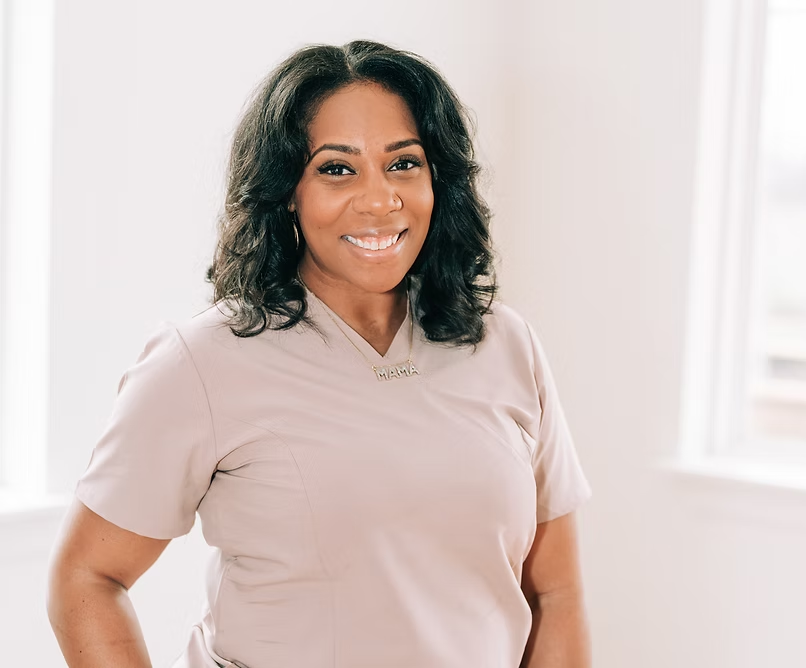
“What felt like a vendor issue turned out to be an ownership issue. Once we fixed that, the whole marketing operation started working again.”

Tiffani Dickerson, RN

The Breast Choice Lactation Services

“I didn’t realize how much I was the bottleneck until I started documenting. Once it was written down, I could actually hand things off.””

Kasi Nayles

Founder, For The Few

“For the first time I had a clear picture of what my business actually runs on. And what was running me instead of the other way around.”

How it works inside RPG

Ready. Plan. Grow!

You get the frameworks. You run them in your business with your
preferred AI doing the heavy lifting. Learn how to apply them with
our team during office hours.

Ready

Get the ownership audit tools and operations frameworks. Upload them to any AI. One prompt and you’re walking through your actual systems. No module to complete first.

Plan

Workshops on access audits, process documentation, and systems design. Weekly office hours with Marcela and the community. Bring your actual tools and setup. Get real answers.

Grow

Premium pre-built prompts for ChatGPT mean your AI runs the RPG operations framework with your actual business setup. Your systems. Your decisions. Starting now.

Premium

$50/mo

Full Skills library and pre-built prompts for ChatGPT. Your AI runs the RPG operations framework with your actual business setup and tools.

Free

$0

Ownership audit tools you can run in an afternoon. Community access so you’re not figuring it out alone. Office hours every week.
Do it with me

Book a free intro call with Marcela

Not sure where to start? Book a 15-minute call. We’ll look at your current setup and tell you exactly which pillar to fix first.

Your other C-suite roles are waiting.

Operations doesn't exist in isolation.

The COO works with the CFO and the CMO. In your business, all three are likely you. Here’s how they connect.
Know Your Numbers
Good numbers depend on clean systems. If your operations are fragmented, your financial data is unreliable. The COO builds the foundation the CFO depends on.
Small Business Marketing
Campaigns fail when tools, approvals, and reporting are messy. Marketing can only run as well as the operations behind it. Fix the systems first.
Go deeper

The blog posts that teach the details.

Marketing operations vs business operations: what's the difference

Your marketing isn't broken. Your marketing operations are.

The marketing tools small businesses should own but probably don't

You might not own your own website

The founder bottleneck solution

What in your business should run without you

Step into your Coo role.

Join free. Run the ownership audit. Show up to office hours.
You’ll know exactly what to fix by the end of the month.